


Organic Hojicha Powder for Lattes — 100g
Couldn't load pickup availability

- 30-Day Returns
- Secure Checkout
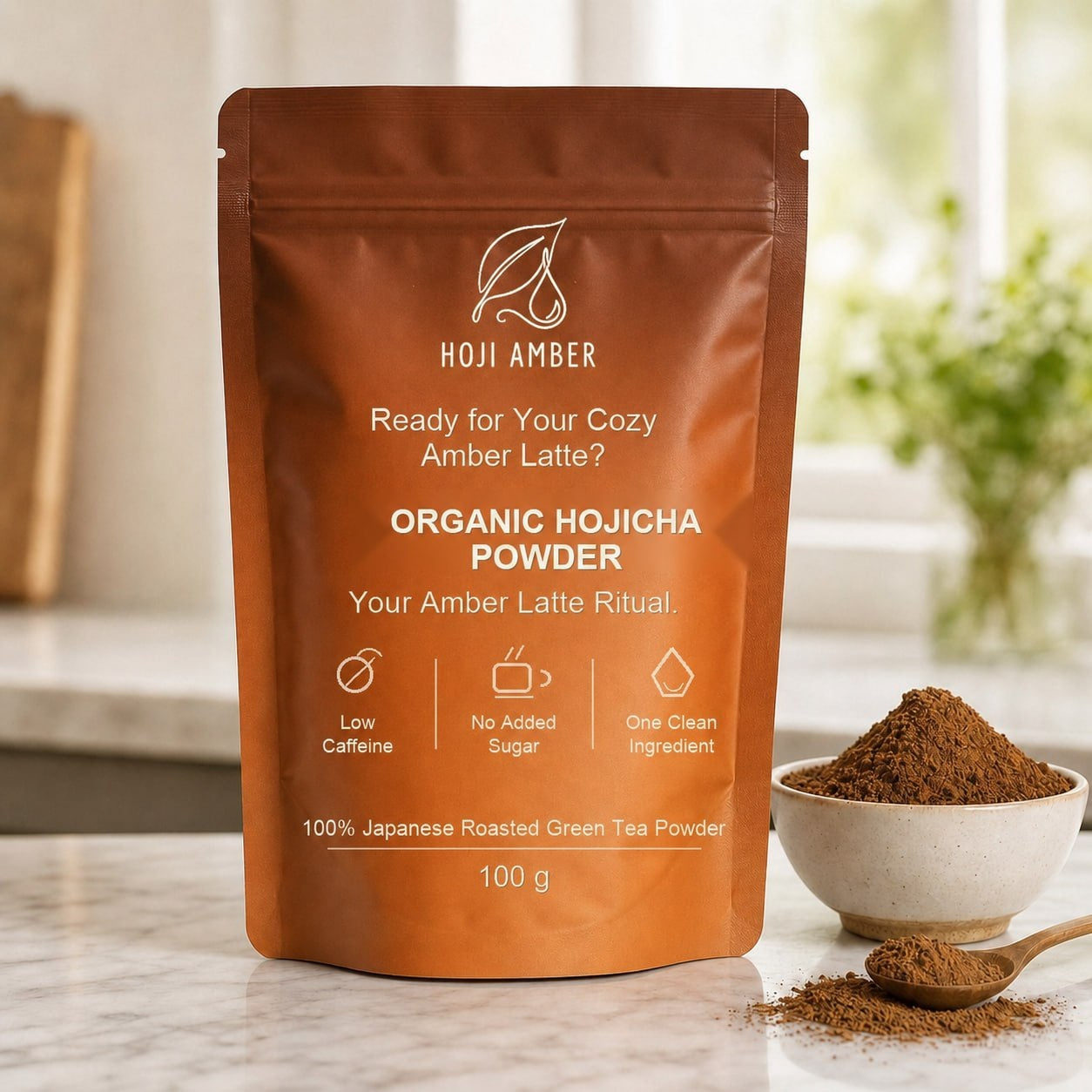
Hoji Amber Organic Hojicha Powder is fine-milled Japanese roasted green tea made for creamy amber lattes at home. It has a warm roasted aroma, smooth caramel-cocoa notes, and a naturally lower-caffeine profile than coffee — without added sugar, dairy, or fillers. Whisk with warm water, add your favorite milk, and enjoy a cozy tea-house hojicha latte in minutes.
Why You’ll Love It
- Premium Japanese hojicha powder for smooth hot or iced lattes
- Roasted caramel-cocoa flavor — nutty, smooth, never grassy
- Naturally lower caffeine than coffee for an afternoon or evening ritual
- One clean ingredient: 100% Japanese roasted green tea powder
- No added sugar, dairy, fillers, artificial flavors, or colorants
- 100g resealable pouch — about 30 creamy lattes at 3g per serving, a fraction of the tea-house price per cup
Product Facts
- Net weight: 100g
- Ingredients: 100% Japanese roasted green tea powder
- Origin: Japan
- Flavor: roasted, nutty, smooth caramel-cocoa
- Best for: hot lattes, iced lattes, smoothies, desserts, and baking
- Serving suggestion: whisk 1 teaspoon / 3g powder with 2 oz warm water, then add 6–8 oz milk
- Added sugar: none
- Caffeine: naturally present in green tea and generally lower than coffee
From Japanese Green Tea to Amber Latte
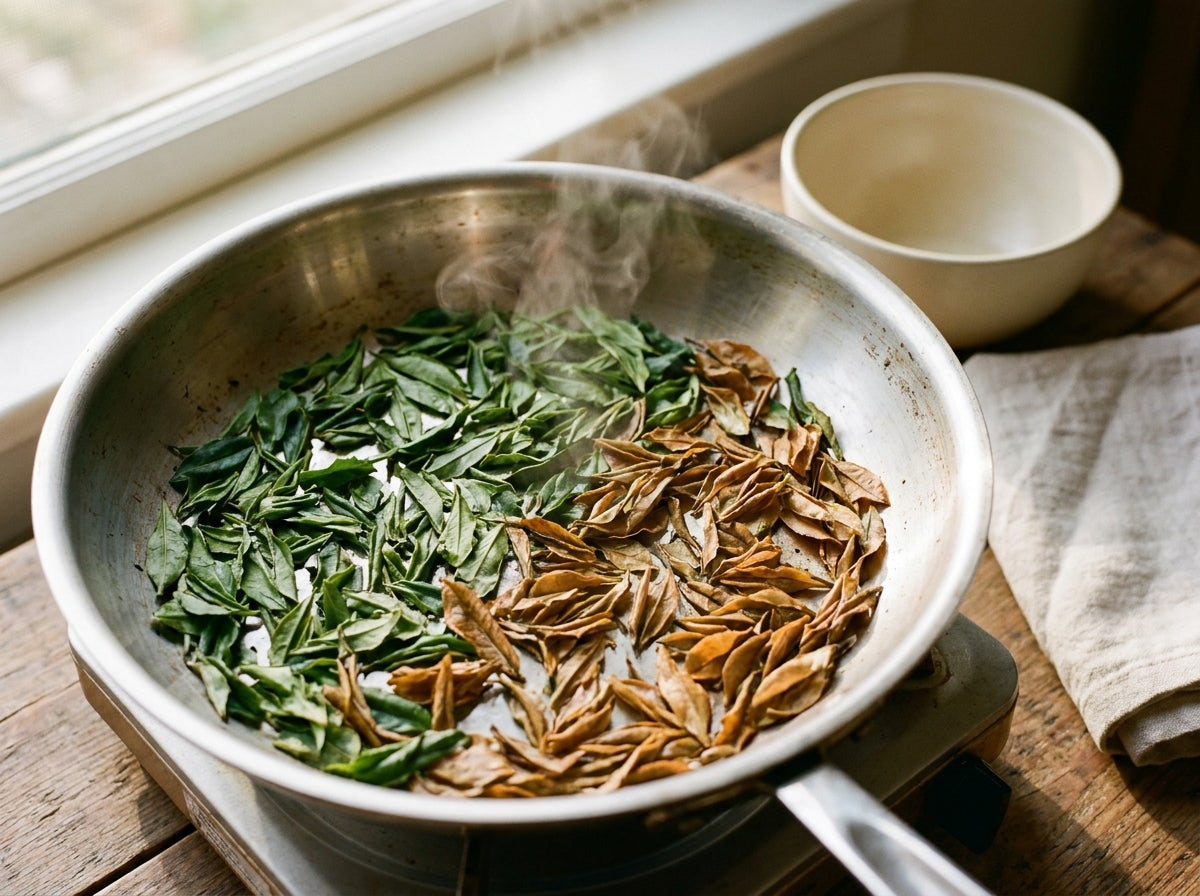
Every scoop starts as real Japanese green tea, gently roasted to unlock hojicha’s warm amber color and toasted aroma. The roasted leaves are fine-milled into a smooth powder that blends easily into milk, creating a creamy latte with cocoa, caramel, and toasted nut notes — no syrups, no flavoring mix, no added sugar.
How to Make a Hojicha Latte
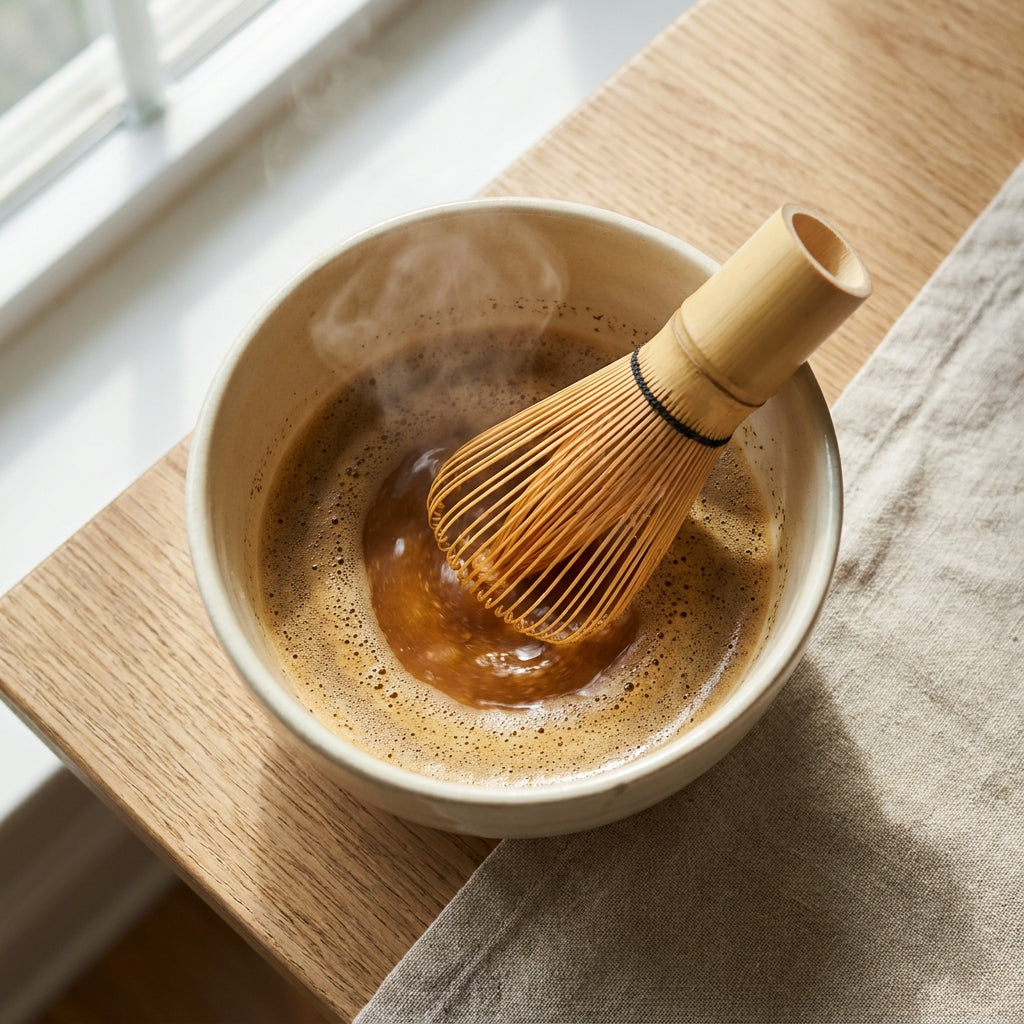
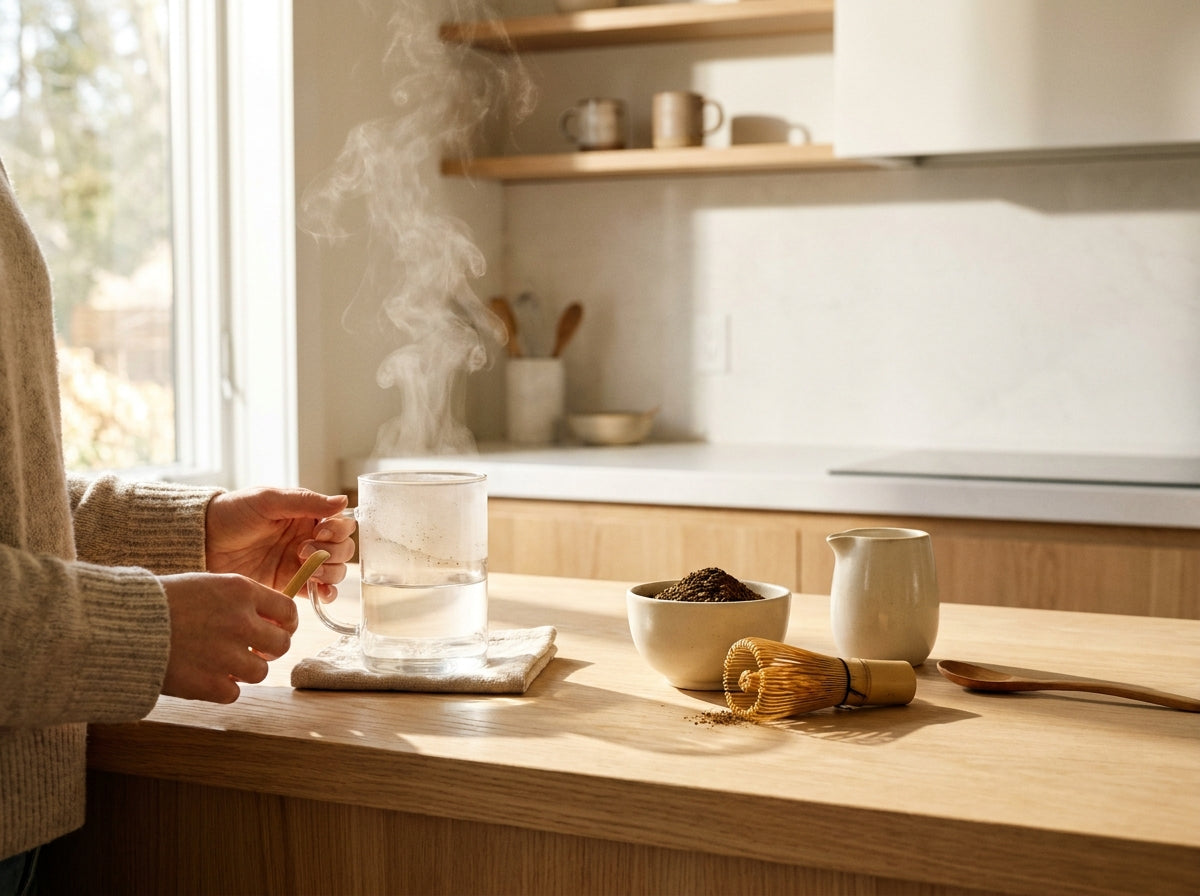
- Add 1 teaspoon / 3g Hoji Amber hojicha powder to a cup or bowl.
- Pour in 2 oz warm water and whisk or froth until smooth.
- Add 6–8 oz hot or cold milk, sweeten if desired, and enjoy your amber latte.
Frequently Asked Questions
What does hojicha taste like?
Hojicha tastes smooth, roasted, and naturally nutty, with warm notes of cocoa, caramel, and toasted nuts. It is less grassy than matcha and makes a creamy amber-colored latte.
Is this a sweetened latte mix?
No. Hoji Amber is 100% Japanese roasted green tea powder with no added sugar, dairy, fillers, artificial flavors, or colorants. Add your preferred milk and sweetener if desired.
Can I use it for recipes?
Yes. Use Hoji Amber in hot lattes, iced lattes, smoothies, mochi, cookies, cakes, ice cream, and other desserts where you want a roasted tea flavor.
Description
Origins
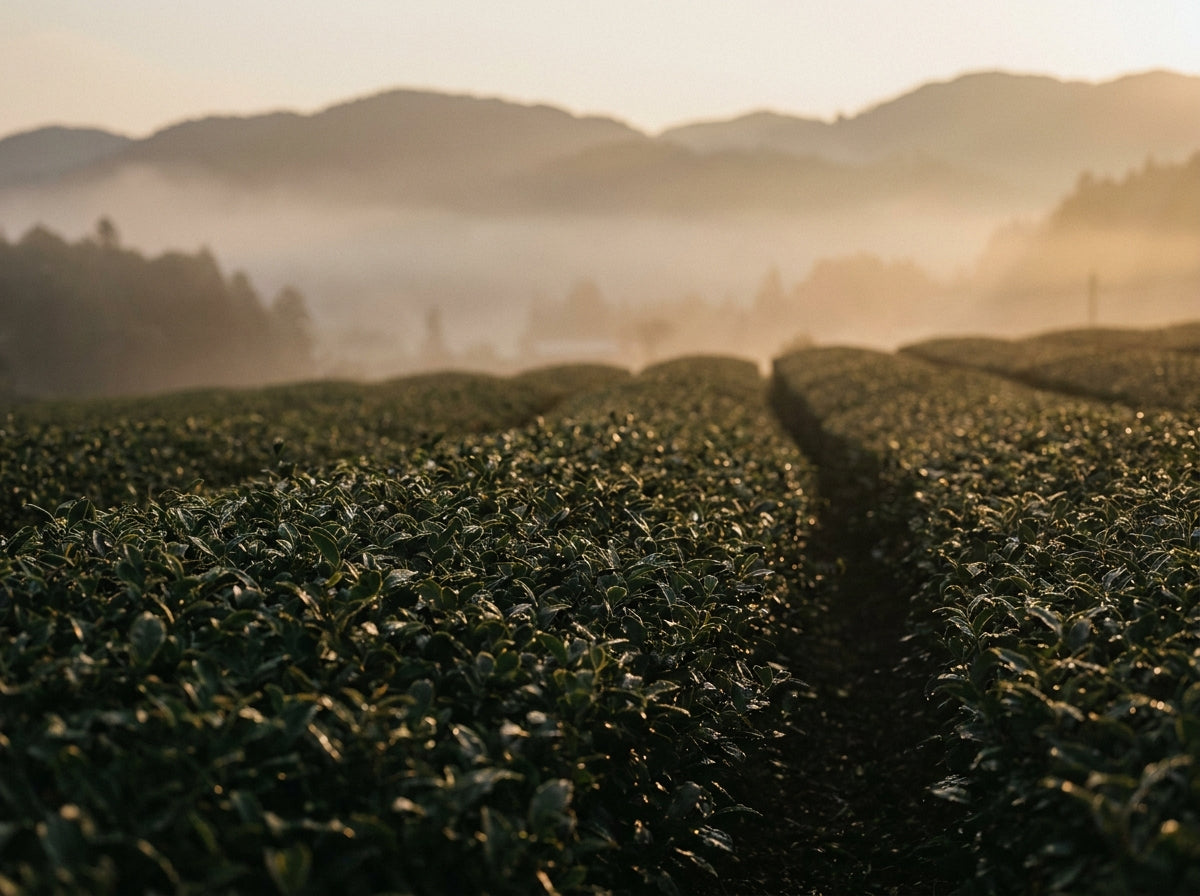
Every pouch of Hoji Amber begins where the world's best hojicha is born — the tea-growing regions of Japan, where green tea leaves are cultivated, harvested, and roasted with centuries of expertise.
We source premium roasted green tea directly from trusted Japanese producers. The leaves are gently roasted at low temperature — the step that transforms ordinary green tea into hojicha, drawing out warm notes of caramel, cocoa, chestnut, and toasted nuts.
The roasted leaves are then stone-milled into a fine amber powder so it can be whisked directly into milk, just like matcha — but smoother, calmer, and naturally lower in caffeine.
What you won't find in our powder: no added sugar, no dairy powders, no fillers, no artificial flavor, no colorants. What you will find: 100% pure Japanese roasted green tea, fine-milled for creamy lattes and recipes, with one clean ingredient on the label.
From Japanese tea gardens to your kitchen — every scoop of Hoji Amber is our promise that real hojicha, gently roasted and carefully milled, can turn your afternoon into a cozy tea ritual.
Storage & Allergen
Key Benefits
☕ Coffee Comfort, Tea Calm
A roasted tea-house latte with naturally lower caffeine than coffee — gentle enough for afternoon and evening rituals.
🍂 Roasted Caramel-Cocoa Flavor
Smooth notes of caramel, cocoa, chestnut, and toasted nuts. Never grassy or bitter.
🌿 One Clean Ingredient
100% Japanese roasted green tea. No added sugar, dairy, fillers, or artificial flavor — sweeten your way.
🥛 Made for Lattes
Fine-milled so it whisks smooth in hot or iced milk. Holds its flavor in oat, almond, soy, dairy, or coconut.
🍰 Versatile Everyday Ingredient
Use in lattes, milk tea, smoothies, ice cream, cookies, mochi, tiramisu, cakes, and overnight oats.
✅ Vegan & Gluten-Free
Simple plant-based tea powder for a wide range of diets.
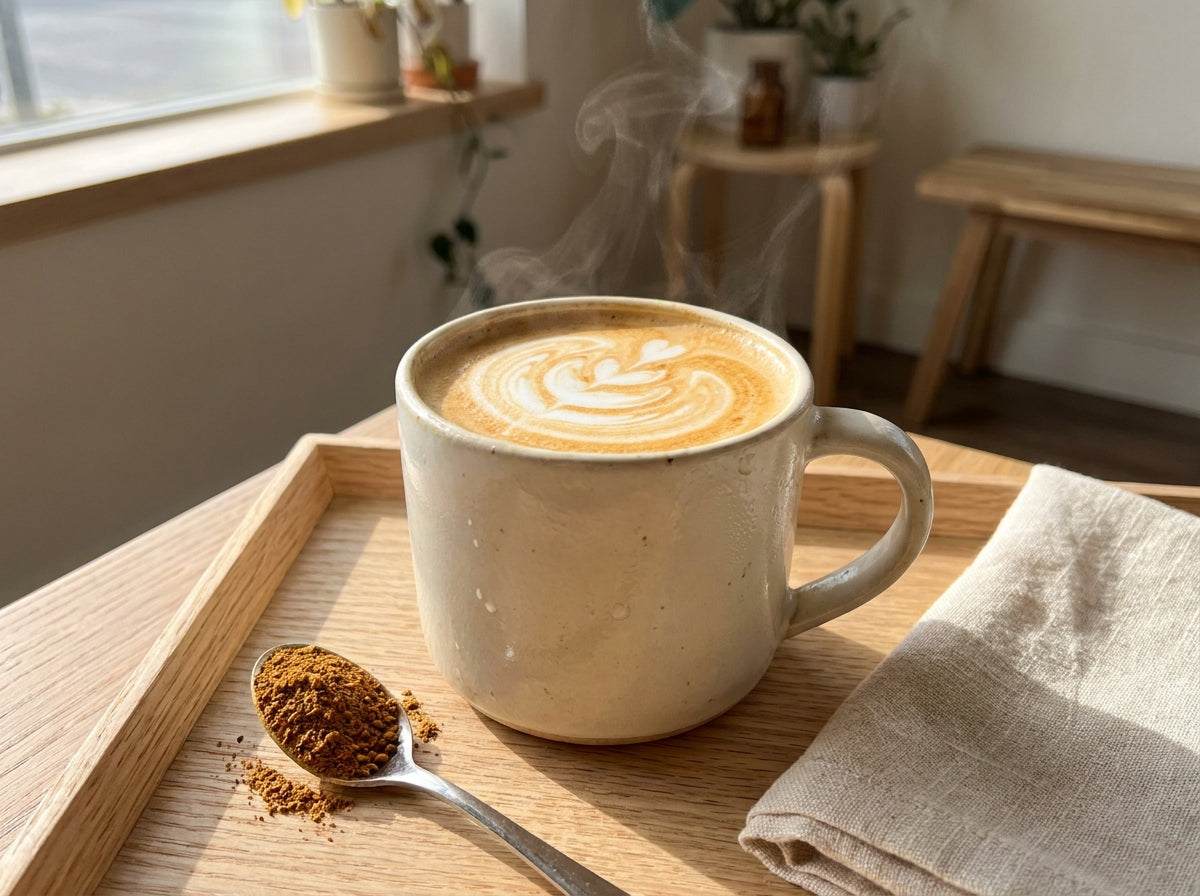
From Japan's Tea Gardens to Your Kitchen
Our hojicha comes from Japan's celebrated tea regions, where green tea has been cultivated and roasted for centuries. The leaves are gently roasted at low temperature — the step that transforms ordinary green tea into hojicha's warm amber color and signature caramel-cocoa flavor.
Each batch is then stone-milled into a fine powder so the tea can be whisked directly into milk, just like matcha — but smoother, calmer, and naturally lower in caffeine.
What arrives in your pouch is 100% Japanese roasted green tea: one clean ingredient, fine-milled for tea-house amber lattes, smoothies, and desserts. No added sugar, dairy, or fillers — just real hojicha, ready for your daily ritual.
Make Every Latte Glow Amber
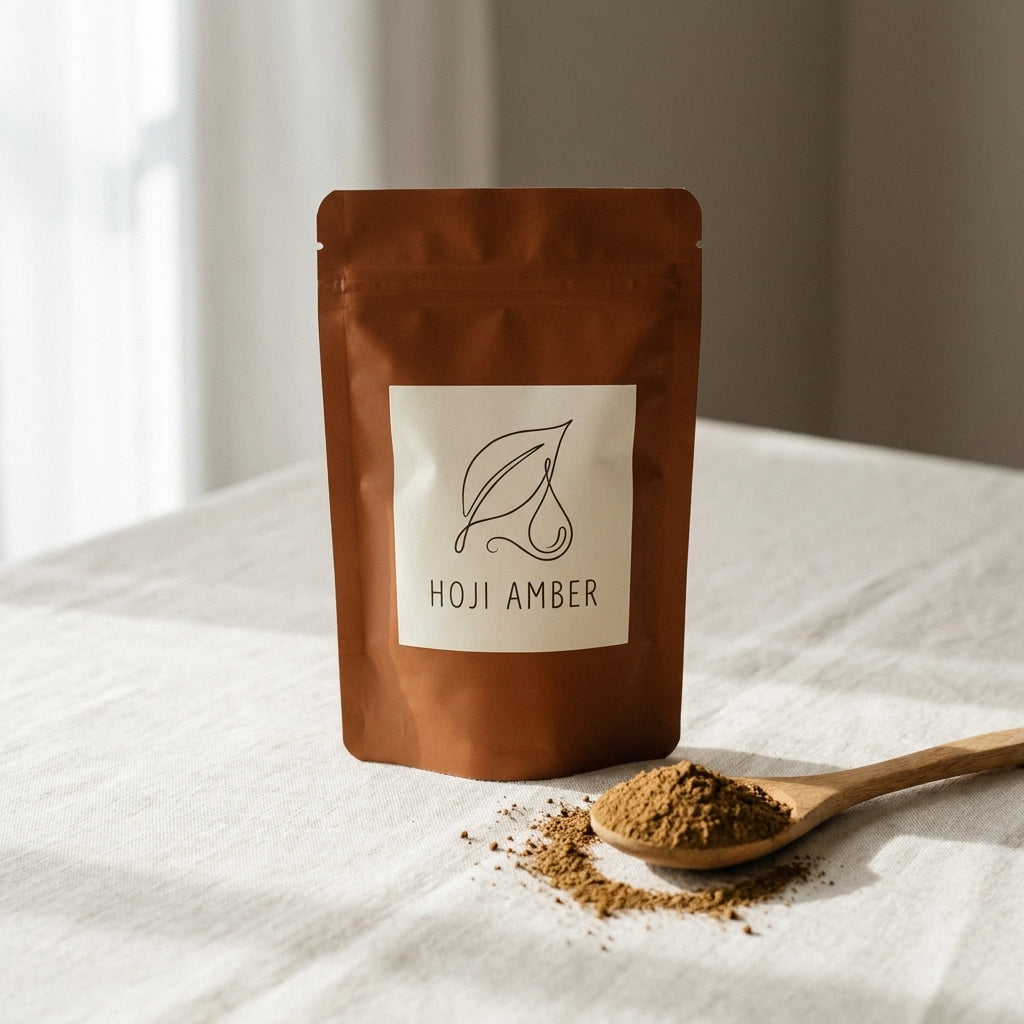
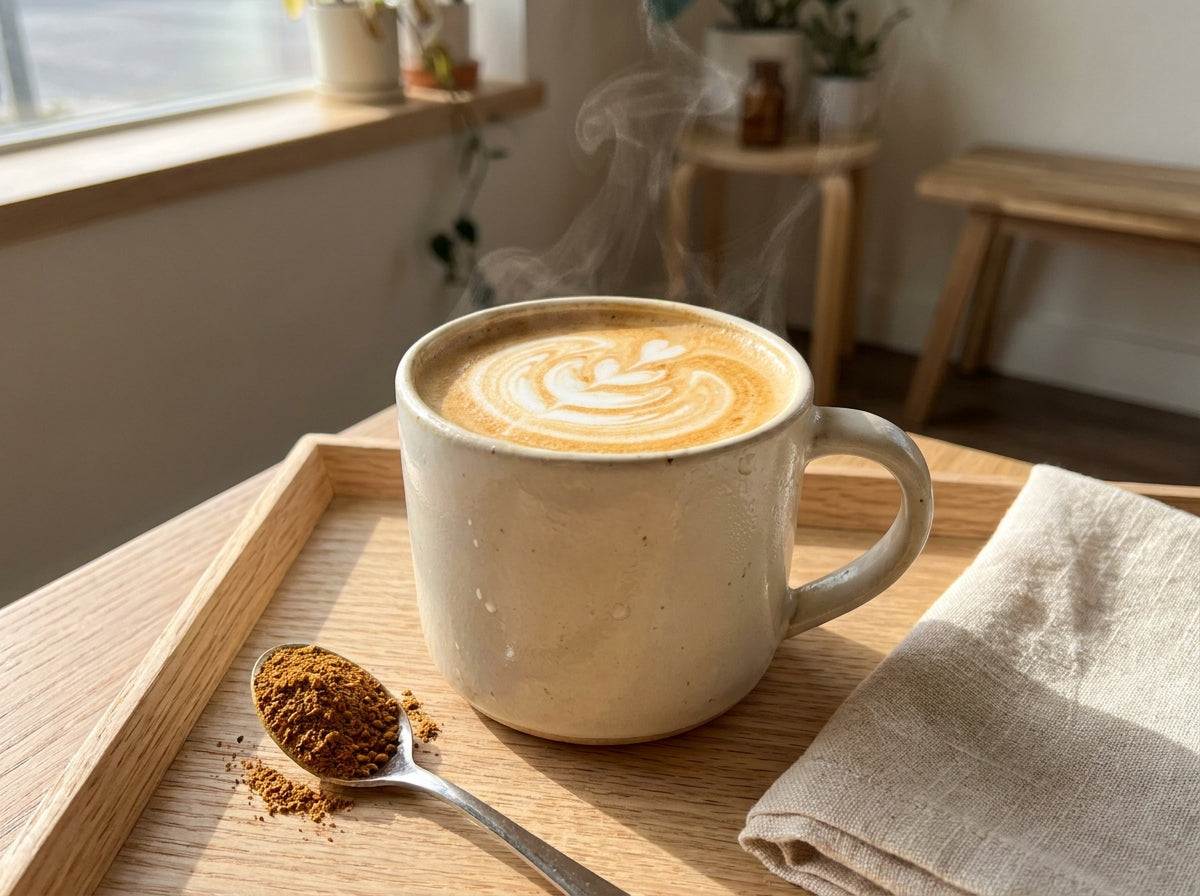
Make Every Latte Glow Amber
From creamy hot lattes to iced oat-milk amber drinks, smoothies, and dessert recipes — Hoji Amber turns any moment into a amber tea ritual.
 STEP 1
 STEP 2
 STEP 3
How it's used 📸
-
Free Shipping
-
Secure Payments
-
Email Support
-
One Clean Ingredient
Frequently Asked Questions
Everything you need to know about Japanese roasted green tea — taste, caffeine, recipes, and how to make the perfect amber latte.
What is hojicha powder?
Hojicha is Japanese green tea that has been carefully roasted, then finely milled into a warm amber powder. The roasting transforms classic green tea into a smooth, cozy drink with notes of caramel, cocoa, chestnut, and toasted nuts. Our Hoji Amber powder is 100% pure roasted Japanese green tea with no added sugar, dairy, or fillers.
How do I make a hojicha latte?
Add 1 tsp Hoji Amber to a cup, pour 2 oz warm (not boiling) water, whisk or froth until smooth, then add 6–8 oz hot or cold milk. For iced lattes, make the concentrate first, then pour over ice and milk. Sweeten with honey, maple, vanilla, or brown sugar — or enjoy it pure. Also works beautifully in smoothies, oatmeal, ice cream, cookies, mochi, and tiramisu.
Does hojicha have caffeine?
Yes, hojicha naturally contains caffeine because it is tea. However, it is commonly much lower in caffeine than coffee and often lower than matcha, which makes it a popular choice for afternoon and evening lattes. It is not caffeine-free.
How is hojicha different from matcha?
Both come from Japanese green tea, but matcha is bright green, grassy, and energizing while hojicha is roasted, amber, and warmer in flavor. Hojicha is naturally lower in caffeine, smoother in milk, and has roasted notes of caramel, cocoa, and toasted nuts. If matcha is bright morning energy, hojicha is cozy afternoon calm.
What does hojicha taste like?
Warm, roasted, nutty, and smooth — with notes of caramel, cocoa, chestnut, and toasted nuts. Hojicha is not grassy or bitter like matcha. It tastes naturally dessert-like, even unsweetened, and pairs especially well with oat milk.
Is hojicha good for you?
Hojicha is a Japanese tea that naturally contains polyphenols, L-theanine, and antioxidants common to green tea. It has no added sugar, no dairy, no artificial flavor, and is naturally low in caffeine — making it a comforting choice for a cozy latte ritual. It is also naturally gluten-free and vegan.
Where does your hojicha come from?
Our hojicha is sourced from Japan, where roasted green tea has been crafted for centuries. The leaves are gently roasted at low temperature to unlock hojicha's signature amber color and caramel-cocoa aroma, then stone-milled into a fine powder for tea-house lattes and recipes.
How much hojicha powder should I use per serving?
For lattes and drinks, use 1–2 teaspoons (1.5–3g) per 240ml cup. For baking, use 2–3 tablespoons per batch. Start with less and adjust to taste — a little goes a long way for flavor and color.
What Does Hojicha Actually Taste Like?
If you've never tasted hojicha, imagine this: roasted caramel and cocoa, with a finish of toasted hazelnut and chestnut. It's not bitter like matcha. It's not sharp like green tea. It's something entirely its own — warm, nutty, and naturally dessert-like, even unsweetened.
In a latte, the roasted notes come forward through oat or dairy milk — like a warm caramel dessert in a cup. In ice cream or tiramisu, the flavor deepens into rich roasted depth with a smooth tea finish. In a smoothie, it adds warm body without competing with fruit.
And no, it doesn't taste like matcha. Where matcha is bright and grassy, hojicha is roasted and cozy — matcha's amber, evening-friendly cousin.